By Akpokona Omafuaire
On September 30, 2021, Delta State joined several southern states in outlawing open grazing with the signing of the Delta State Livestock Breeding, Rearing and Marketing Regulation Law, 2021. The legislation was expected to reduce farmer-herder conflicts, protect farmlands, improve security and promote ranching as a modern livestock management system.
Read Also: Oyo students, teachers rescue: How security agents weakened terrorists
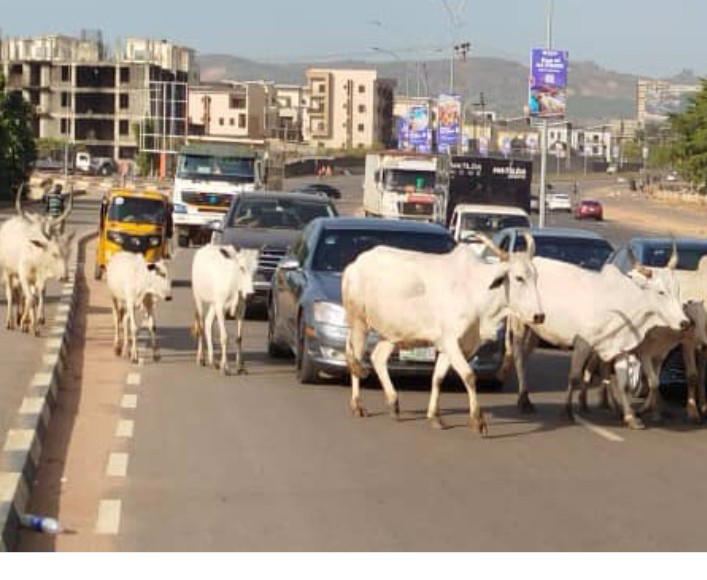
Today, however, little has changed. Across several Delta communities, reports of cattle destroying crops, roaming highways and grazing on cultivated land continue to surface. While the law remains in force, residents question whether it is being effectively enforced.
The law established a Livestock Management Committee, prohibited open grazing and provided penalties for violations as well as a transition towards regulated livestock production.
Yet, implementation appears to be the missing link. Farmers daily lament recurring complaints of crop destruction, delayed intervention by authorities and the absence of compensation for losses.
Legal experts argue that the legislation alone cannot solve the problem. They insist that enforcement, political commitment, adequate funding and collaboration among security agencies, traditional rulers and local governments are necessary to make the law effective.
According to a Senior Warri based legal practitioner, Dr Eric Omare Esq, “On the non-implementation of the anti-grazing law of Delta State, I don’t think it is only in Delta State. It applies all over Nigeria. The problem in my view is two-fold.
“The First is institutional challenge. Laws are supposed to be enforced by the police, but the state governments that enacted the anti grazing laws unfortunately do not have control over the police to ensure enforcement. That brings to fore the need to have state police.
“Secondly, there is also the lack of political will. Merely enacting a law is not enough. The government must have the political will to enforce the anti-grazing law. I think the political will is lacking. So the combination of institutional challenge and lack of political will accounts for the non enforcement of the anti-grazing laws all over Nigeria.”
On his part, Francis Avbenagha Esq said, “The Delta State Livestock Breeding, Rearing and Marketing Regulation Law, 2021, was enacted to end open grazing, protect crops, and promote modern ranching. Nearly five years on, the central question is whether it has transcended legislative symbolism to become an effective regulatory instrument. The evidence suggests it has not, it remains, in substantial measure, a decorative statute.
“The law prohibits open grazing and carrying firearms, and establishes Livestock Management Committees at state and local government levels. Its legislative intent is unassailable. But efficacy depends on enforcement, and here the law has manifestly failed.
“The Delta State Police Command admitted it had never received the law. A law the primary enforcer has not received cannot be enforced. The NBA and lawmakers have accused the police of selective enforcement, prioritising indecent dressing over anti grazing.
“Deputy Speaker Arthur Akpowowo lamented that herders still roam freely; more troubling, he alleged that security agencies (Police and DSS) have actively frustrated enforcement by summoning officials who began implementing the law. Local government task forces remain largely unestablished, in December 2024, the Executive Assistant to the Governor was still charging chairmen to set them up, three years after enactment.
“The state’s 45-man Livestock Management Operatives have been obstructed; Divisional Police Officers have refused to collaborate and released arrested suspects without the Committee’s consent.
“The Constitution places policing on the Exclusive Legislative List, while agriculture and land use are Concurrent. This legal vacuum, combined with the absence of a national grazing framework, creates a fundamental enforcement deficit. The Delta experience mirrors that of all 17 Southern states, where animals still graze openly despite similar laws.
“The failure has escalated insecurity with the Centre for Peace and Environmental Justice condemning the government’s lack of political will. For this law to become effective, several steps are imperative: (1) Formal transmission of the law to all security agencies with clear implementation guidelines; (2) adequate funding and equipment for the Livestock Management Committee and local task forces.
“(3.) Community engagement and provision of ranching alternatives, prohibition without alternatives invites defiance; (4) robust legislative oversight to hold agencies and local governments accountable; and (5) pressing the Federal Government for a national framework or devolution of policing powers to states.
“Conclusively, the Delta State Anti-Open Grazing Law is a commendable legislative effort, but a law not enforced is lex imperfecta, it commands but does not compel. Open grazing continues unchallenged; police and DSS have been indifferent or obstructive; local governments have been lethargic; and the enforcement committee has been sabotaged.
“The law has become legislative ornamentation. The challenge now is not legislative but executive, it requires political will, resources, inter-agency coordination, and a genuine commitment to the rule of law. Without these, the law will remain what it has become: a well intentioned but impotent intervention.” He stated.
On his part, Comrade Austin Ozobo, National President Ijaw Peoples Development Initiative, IPDI added “the Delta anti-grazing law is nothing but ceremonial protocol, decorative laws. The effectiveness of any law is not measured by its existence in the statute books but by the sincerity and consistency of its enforcement.
“Delta State’s Anti-Open Grazing Law was enacted to address recurring conflicts between farmers and herders, protect lives and property, and promote modern livestock management. The current government of Delta State lacked the political will to enforce it, because of their selfish political interests.
“The law has faced a serious setback right from the day of passing into a bill and delayed signing into law. The law is now for decorative purposes, ceremonial protocol and government policy. Open grazing continues openly across different parts of the state without consequences. Properties, farmland and communities have faced frequent attacks.
“Many killed and others abducted for ransom, all these are perpetrated by these so-called Herders on jihadist mission.
A law that is not consistently enforced gradually loses its deterrent value and public confidence in the legal system is weakened.
“Deltans have lost confidence in the current state government and its anti-grazing laws, because it has played out in different form that the law is toothless, it can’t bite and in such circumstances, the only option is self-defense. I know very well that the day the Governor’s son or a Senator family members will be kidnapped or killed by these herders, the enforcement of the anti-grazing law will be considered.
“Today our peace, right to life and movement are serious threatened. We live in fears in our communities. We are afraid to travel because our roads are no longer safe but It is sad that Governor Sheriff Oborevwori has prioritized his political alliance with the godfathers of herders than the well-being of his people, it is a pity that he has lost focus and direction.
“It is my call that the government and relevant security agencies should strengthen monitoring, prosecute violators where necessary, and engage stakeholders—including herders, farming communities, and traditional rulers to ensure compliance.” He said.
For Delta farmers, the question is no longer whether the law exists. It is whether it is working. Until enforcement becomes visible and consistent, the promise of protecting farms, lives and investments may remain largely unrealised.